
AI tools now answer questions that people once typed into a search box, and many of those answers cite a few web sources. That shift is why ChatGPT SEO matters to site owners: your pages need to be easy to find, understand, and trust when an AI system builds a response. No tactic can guarantee a mention, and platforms change often. This guide explains what official documentation confirms, what is sensible general practice, and how to create content that serves readers first.
What Is ChatGPT SEO?
ChatGPT SEO is the practice of making your content discoverable and useful to ChatGPT’s search features, so your pages can be surfaced or cited when someone asks a relevant question. It is not a separate discipline with secret rules. It builds on familiar fundamentals: crawlable pages, clear writing, accurate information, and real expertise.
You will also see it described as AI SEO, generative engine optimization (GEO), answer engine optimization (AEO), or LLM optimization. Industry sources note that AEO and GEO describe much the same underlying approach in practice. The labels differ, but the work overlaps heavily with classic SEO. emarketer
OpenAI documents some technical details, covered below, but it does not publish a ranking formula. Anyone claiming to know exact “ChatGPT ranking factors” is guessing. If you want a hands-on walkthrough for this one platform, read our step-by-step guide to ranking your website in ChatGPT. This article takes the wider view: strategy, cross-platform visibility, and measurement.
What Is AI Search Visibility?
AI search visibility describes how often, and how prominently, your brand or pages appear in AI-generated answers. That can be a cited link, a named mention, or a recommendation inside a response. It spans several surfaces, including ChatGPT, Perplexity, Microsoft Copilot, and Google’s AI Overviews and AI Mode.
Visibility is not the same as traffic. A page can be cited without being clicked, and a visit may arrive days after a mention. Treat visibility as one signal alongside rankings, clicks, and conversions. Modern AI content marketing works best when it tracks all of them.
How AI Search Differs from Traditional SEO
Traditional search returns a ranked list of links. AI search usually generates a written answer and cites a handful of sources. Three differences matter in practice:
- Answers are synthesized. A system may combine several pages, so clear, self-contained passages are easier to use than long, vague ones.
- Queries are conversational. People ask longer, more specific questions. Google says AI Overviews and AI Mode may use a technique called query fan-out, running multiple related searches across subtopics. google
- There are fewer slots. A generated answer shows fewer sources than a full results page, so being the clearest, most reliable source on a narrow topic matters more.
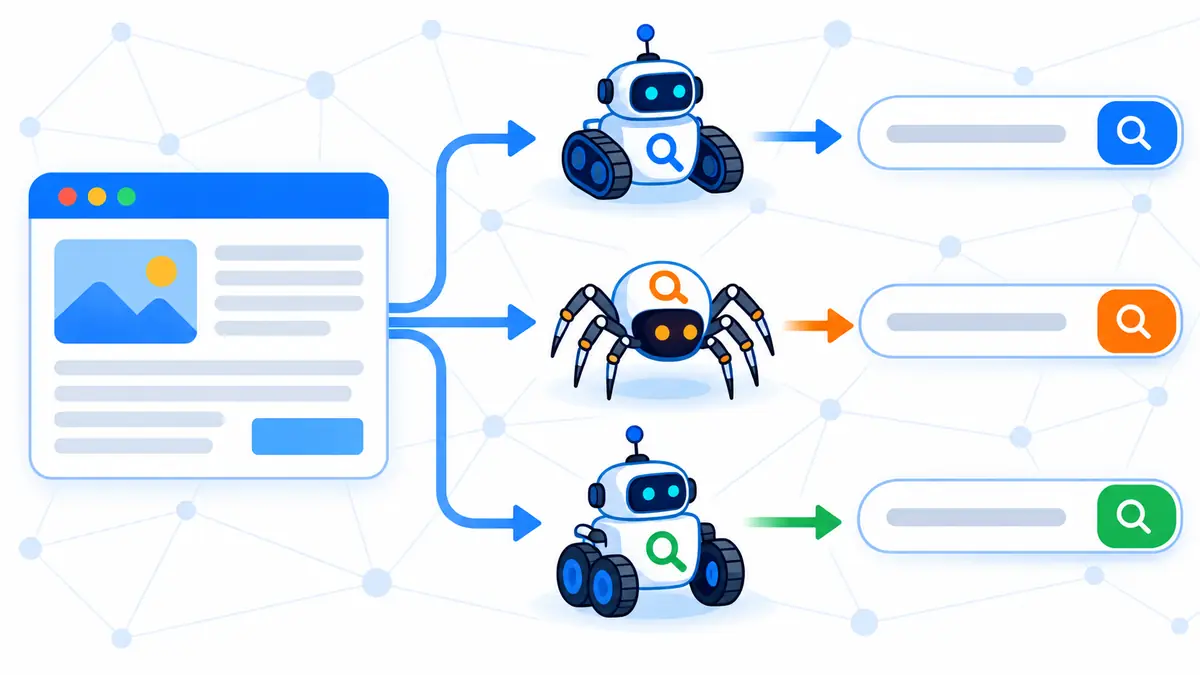
How ChatGPT and Other AI Search Platforms Discover Content
Each platform has its own crawlers and rules, so it helps to know what each has actually documented.
- ChatGPT: OpenAI uses a crawler called OAI-SearchBot to surface sites in ChatGPT search, and sites that opt out will not be shown in its search answers, though they can still appear as navigational links. OpenAI recommends allowing it in robots.txt and says changes can take around 24 hours to apply. GPTBot is a separate robots.txt tag, and user-initiated fetches may not follow robots.txt rules, so check that your rules treat each bot as you intend. Details are in OpenAI’s crawler documentation. openai
- Google: Google states there are no additional requirements to appear in AI Overviews or AI Mode, and you do not need special AI text files or new markup. Its AI features guidance points to ordinary practices, such as making content findable through internal links and keeping structured data consistent with visible text. google
- Perplexity: Perplexity runs a crawler named PerplexityBot to index content for its search engine, and it explains how to allow or restrict access in its bot documentation.
10 Practical Ways to Improve AI Search Visibility
None of these steps guarantees inclusion in any AI answer. Together, they make your site easier for people and machines to use, which is the core of AI search optimization.
Publish Helpful, Original Content
Google’s guidance on generative AI features emphasizes valuable, unique, non-commodity content, and its optimization guide is worth reading in full. A page that repeats what ten others say gives an AI system little reason to cite you. Add something specific: a worked example, your own process, data you actually collected, or a clear point of view. Free AI writing tools can speed up drafting, but the insight should come from you. google
Match Search Intent and Answer Questions Clearly
Decide what the reader needs, whether a definition, comparison, or how-to, and answer it near the top before expanding. Conversational queries often arrive as full questions, so phrase some headings the way people actually ask. Solid keyword research shows which questions recur. Titles and snippets should also set honest expectations, and an SEO title generator and meta description generator can help you draft options to test.
Build Topical Authority
Cover a subject in depth across connected articles rather than publishing isolated posts. A cluster that explains basics, tactics, tools, and measurement shows depth to readers and makes internal linking natural. Your content marketing strategy should map these clusters before you write.
Demonstrate Experience and Expertise
Show who is behind the content. Use real author bios, first-hand examples you can stand behind, and accurate explanations. Never invent credentials, testimonials, or case studies. Developing personal branding around a named expert gives readers a consistent identity to trust.
Improve Crawlability and Indexability
If a crawler cannot reach a page, it cannot use it. Review robots.txt rules for the bots you want to allow, keep important pages free of accidental noindex tags, fix broken links, and keep pages fast. A meta tag analyzer helps you review titles, descriptions, and other tags, and an SEO slug generator keeps URLs short and readable.
Use Clear Headings and Logical Content Structure
Descriptive headings, short paragraphs, lists, and tables help skimmers and machines see what each section covers. Put the direct answer first, then supporting detail. Our SEO copywriting guide covers structure in more depth. Support text with useful images, and describe them accurately using an image alt text generator.
Strengthen Relevant Internal Linking
Google lists internal links among the ways to make content easy to find. Link related pages with descriptive anchor text, and make sure important articles are not orphaned. Vary your anchors naturally instead of repeating the same phrase.
Support Important Claims with Reliable Sources
Cite primary sources, such as official documentation, original studies, and government data, when you state facts. This helps readers verify your work and protects you from repeating myths. Avoid statistics you cannot trace to a named source.
Keep Important Content Accurate and Updated
AI platforms and their guidelines change quickly, so outdated advice can mislead readers. Review high-value pages on a schedule, correct facts, and note update dates when they are meaningful. A refresh is also a good moment for repurposing content into summaries, checklists, or short videos.
Track AI Referral Traffic and Brand Mentions
Watch your analytics for visits from AI platforms, and periodically test real questions in ChatGPT, Perplexity, and Google to see whether your brand appears. Record results over time instead of judging one answer, since responses vary. Brand mentions can be influenced by how well known and trusted you are, so efforts to build an audience support this too.
Does Traditional SEO Still Matter for AI Search?
Yes. Google states that its AI features rely on its core ranking and quality systems, and its guidance says established SEO best practices remain relevant. Pages that cannot be crawled, load slowly, or lack a clear purpose are weak sources for anyone, human or machine.
Think of fundamentals as the foundation and AI-specific work as a layer on top: allowing the right crawlers, writing in clear answer-ready passages, and tracking mentions. Smaller teams can start with the priorities in content marketing for small businesses before adding anything more advanced.
How to Measure AI Search Visibility
Measurement is still imperfect, so combine several signals:
- Analytics: Look for referral traffic from AI platforms and compare it with organic search over time.
- Search Console: Google’s documentation says traffic from its AI features is included in overall search traffic, so it may not be easy to isolate. Features and reports may change, so check current documentation.
- Bing Webmaster Tools: Microsoft introduced AI Performance, which shows how content appears across Copilot, AI-generated summaries in Bing, and select partner integrations. It reports citations rather than clicks. Read the official announcement for current details. bing
- Manual prompt testing: Save a list of important questions, then log the platform, date, and whether you were cited or mentioned.
Review trends monthly. One answer is an anecdote, not evidence.
Common AI SEO Mistakes to Avoid
- Trusting unverified claims about ranking factors or guaranteed citations.
- Blocking search crawlers by accident through robots.txt or security settings.
- Publishing thin, mass-produced pages with no original insight.
- Stuffing keywords or rewriting everything in an unnatural “AI-friendly” style.
- Adding structured data that does not match what visitors can see.
- Judging ChatGPT SEO results from a single prompt instead of repeated tests.
- Letting key pages go stale while platforms and guidance evolve.
AI Search Optimization Checklist
- Search crawlers you want, such as OAI-SearchBot and PerplexityBot, are allowed
- Key pages are indexable, fast, and linked from related content
- Each article answers one clear intent near the top
- Headings are descriptive and follow a logical order
- Original examples, data, or insight are included
- Authors and expertise are clearly shown
- Factual claims link to reliable sources
- Structured data matches visible page content
- Important pages are reviewed and updated on a schedule
- Referral traffic and brand mentions are logged monthly
Frequently Asked Questions
What is ChatGPT SEO?
It is the practice of improving how easily ChatGPT’s search features can find, understand, and cite your content. It relies on standard SEO fundamentals, crawler access, and clear, trustworthy writing.
What does AI search visibility mean?
It means how often your brand or pages appear in AI-generated answers as links, citations, or mentions across platforms such as Perplexity, Copilot, and Google’s AI features.
How can I improve my website’s visibility in ChatGPT?
Allow OAI-SearchBot in robots.txt, keep pages indexable and fast, publish original and well-structured content, and keep facts current. No step guarantees inclusion.
Is AI SEO different from traditional SEO?
Mostly it is an extension. Core practices stay the same, while you add crawler management for AI bots, conversational phrasing, and new measurement methods like prompt testing.
Does Google SEO help with AI search visibility?
It helps with Google’s AI features, which Google says build on its core systems. Other platforms follow their own rules, though crawlable, credible content is generally easier for any system to use.
How can I get my content cited by AI search engines?
You cannot force a citation. Offer specific, verifiable answers, support claims with sources, keep pages accessible to the platform’s crawler, and build a reputation as a reliable source.
How can I track AI search traffic?
Check analytics referrals from AI platforms, review Bing’s AI Performance report, use Search Console for overall Google traffic, and test prompts manually on a schedule.
How long does AI search optimization take?
There is no fixed timeline. OpenAI says crawler setting changes can take about a day to apply, but content improvements may take weeks or months to show results, depending on competition and topic.
Conclusion
ChatGPT SEO is less about tricks and more about being a source worth citing. Keep your pages crawlable, answer real questions clearly, show genuine expertise, and back claims with reliable sources. Then measure patiently, because AI search changes fast and results vary. Start with the checklist above, fix any crawler or indexing gaps first, and improve one important page at a time.

- I’m Saba Sheikh, a self-employed copywriter and SEO content writer specializing in website copy, landing pages, SEO blog writing, product descriptions, and email copywriting. I create search-optimized, conversion-focused content that helps startups, small businesses, and eCommerce brands grow their online presence and attract more customers.